A new study from the University of Haifa reveals that the ability to mentally “sync” with a stranger during a first conversation may play a crucial role in psychological resilience
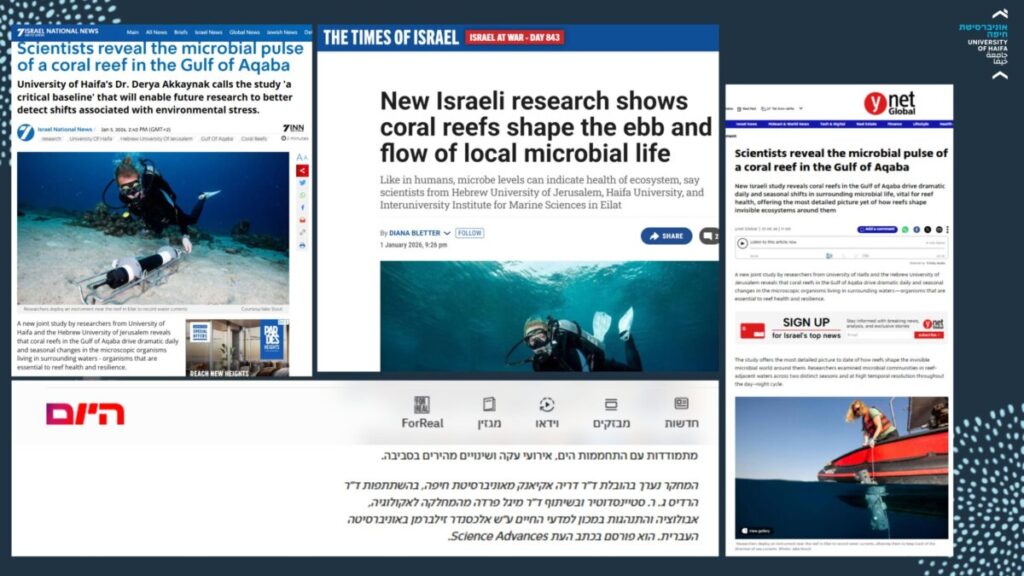
Coral reefs are often seen as vibrant ecosystems of corals and fish—but new research reveals that an equally dynamic world exists beyond what the eye can see. A study conducted
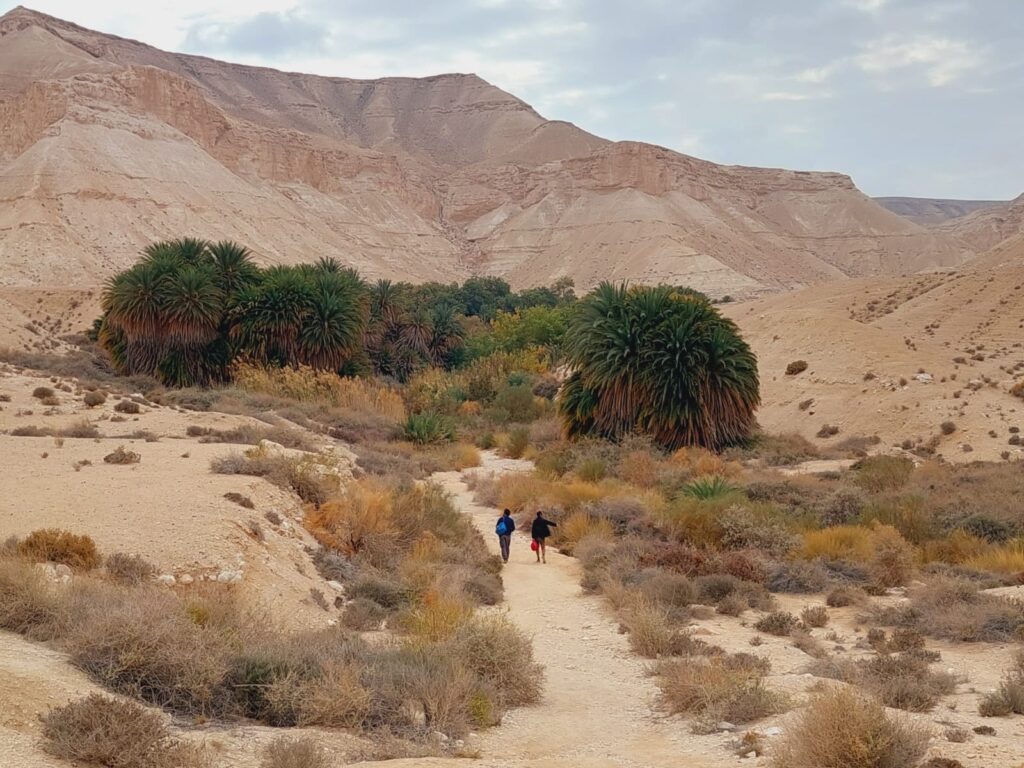
Researchers from the University of Haifa, Dr. Roy Galili and Prof. Guy Bar-Oz of the School of Archaeology and Maritime Cultures, have identified a previously unknown wild date palm population
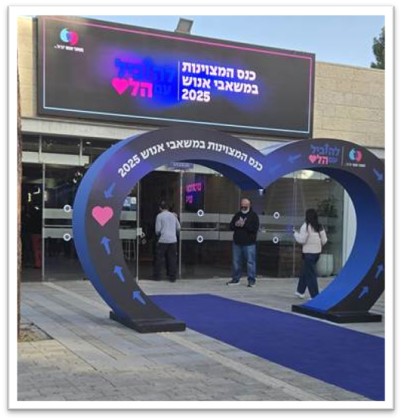
The University of Haifa’s “Talents” Program, operating under Academia 360, showcased a unique model at Israel’s leading HR Excellence Conference, bridging focused academic training with real industry needs. Exposure to
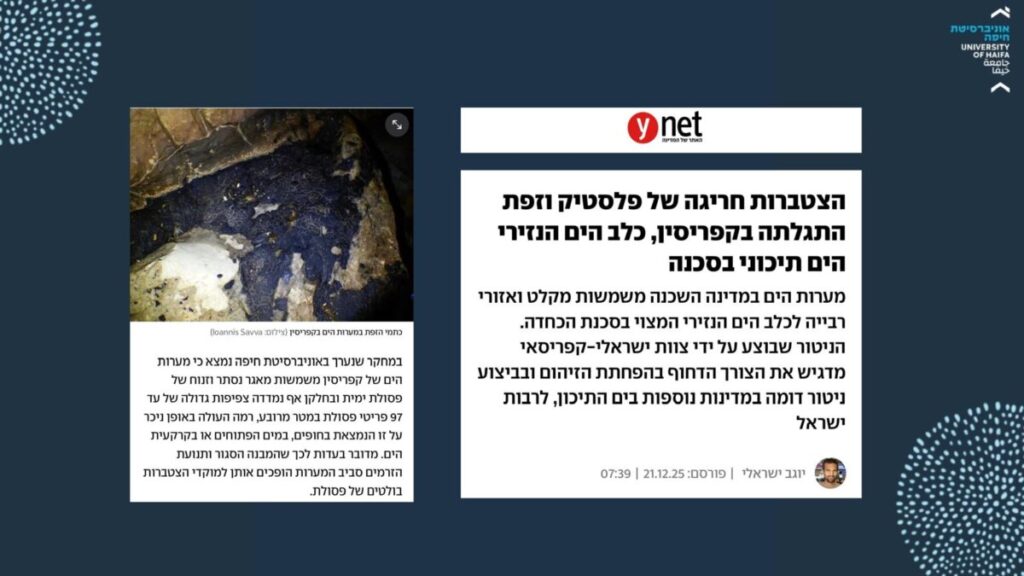
A new study led by researchers from the University of Haifa reveals that sea caves along the coast of Cyprus function as hidden accumulation hotspots for marine debris—harboring pollution levels
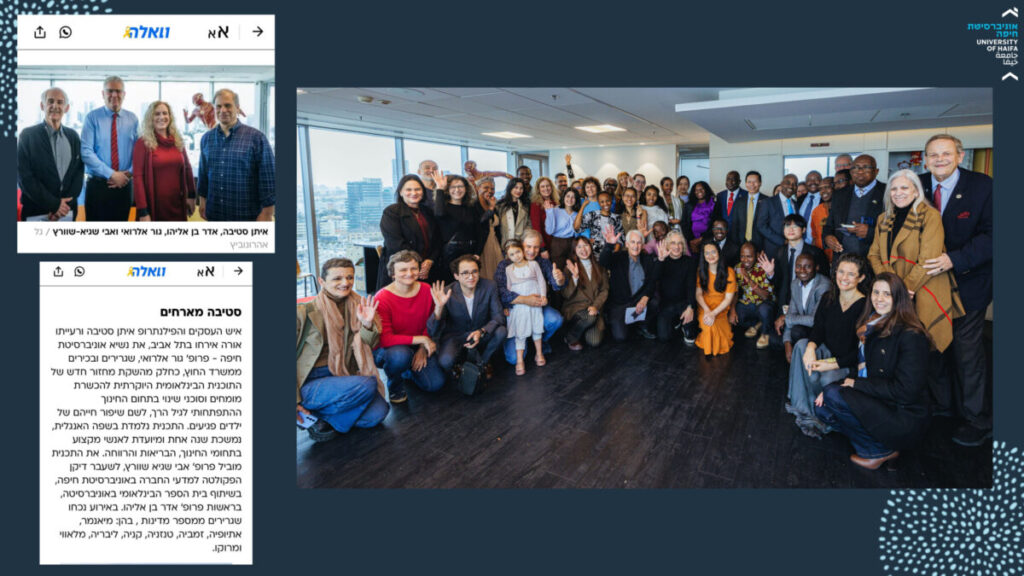
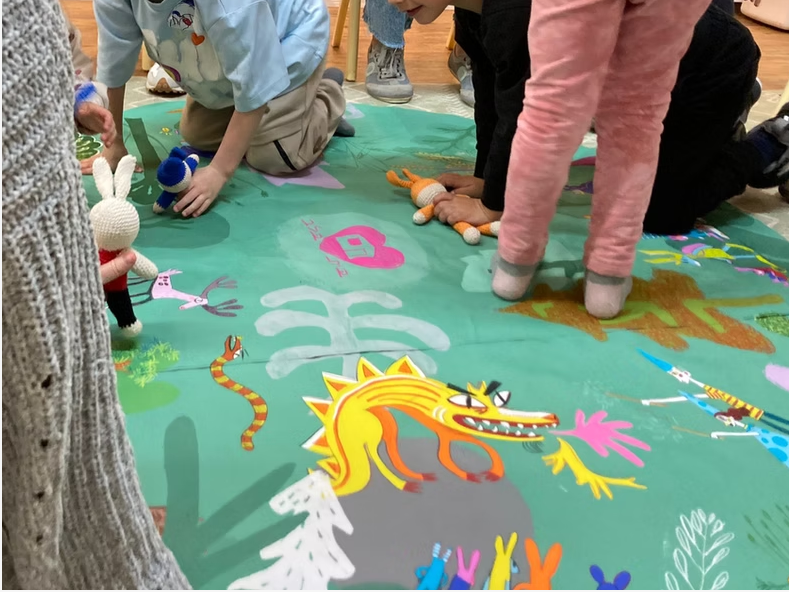
The Stiva family warmly welcomed students, alumni, and faculty from the International Early Childhood Education and Development Program at the University of Haifa – a one-year, English-language program preparing professionals
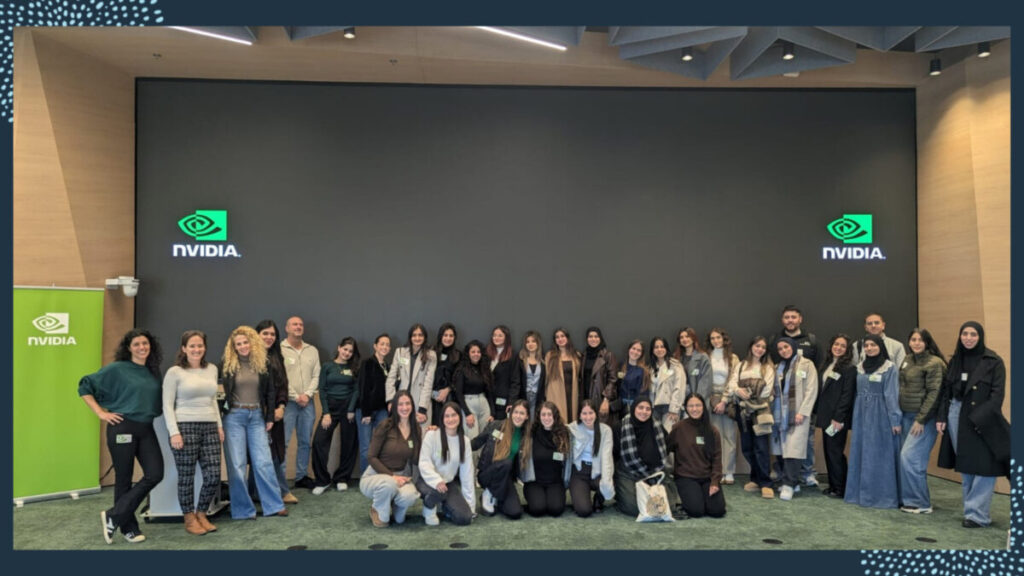
This week marked the grand finale of the Academia 360 HR Incubator, with a standout professional visit to NVIDIA’s offices in Yokneam. The visit brought together University of Haifa students
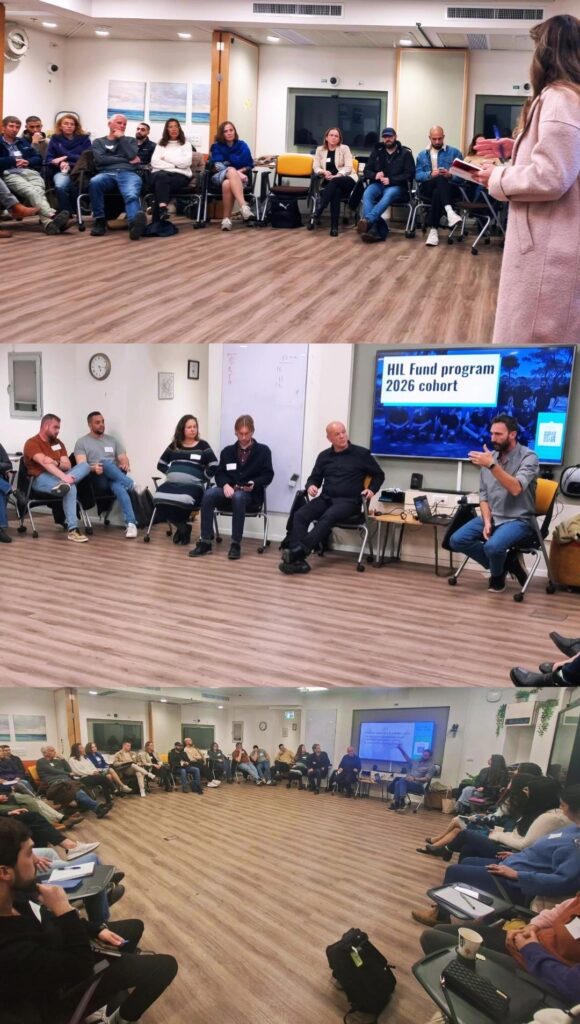
Haifa Innovation Labs (HIL) leads the HILFUND Ideation Bootcamp, a university-based entrepreneurship program designed for students and early-stage entrepreneurs seeking to develop ideas with meaningful social and environmental impact. The
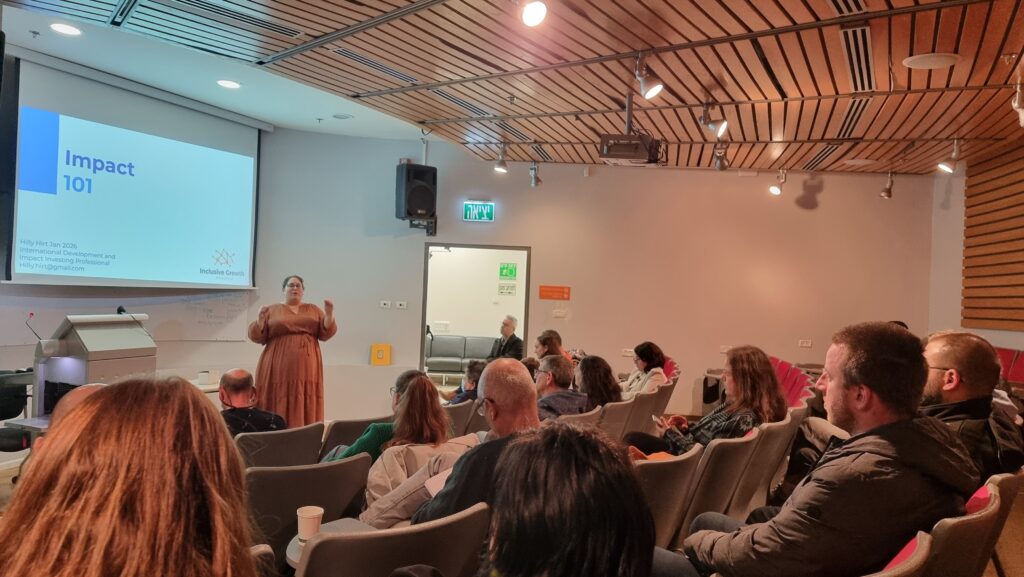
The first HIL SPARKS Meet-up on Impact Measurement, led by Haifa Innovation Labs (HIL), brought together a strong and diverse audience of entrepreneurs, HIL alumni, and students for an evening
This project was selected for funding under the University of Haifa’s Impact Research Initiative (2024–2025) and supported by a NIS 50,000 grant from the Innovation and Sustainability Division. The awarded
This project was selected for funding under the University of Haifa’s Impact Research Initiative (2024–2025) and supported by a NIS 50,000 grant from the Innovation and Sustainability Division. The awarded
This project was selected for funding under the University of Haifa’s Impact Research Initiative (2024–2025) and supported by a NIS 50,000 grant from the Innovation and Sustainability Division. The awarded
אתר זה עושה שימוש שימוש בקבצי עוגיות (COOKIES) וטכנולוגיות מעקב לצורך תפעולו התקין ואבטחתו וגם למטרות נוספות כמו שיפור חווית הגלישה, ניתוח נתונים סטטיסטיים פרסום מותאם אישית או מבוסס העדפות. אנו לא נתקין באמצעות האתר על מכשירך עוגיות וטכנולוגיות מעקב נוספות שאינן הכרחיים לתפעול הטכני של האתר ללא הסכמתך. למידע נוסף אנא עיין בחלק "נתונים שאינם מידע אישי אשר אנו אוספים באתר" במדיניות הפרטיות שלנו.
"This website uses cookies and tracking technologies for its proper functioning and security, as well as for additional purposes such as improving your browsing experience, statistical data analysis, and personalized or preference-based advertising. We will not install on your device any cookies or tracking technologies that are not strictly necessary for the technical operation of the site without your consent. For more information, please refer to the section “Non-Personal Data we Collect" in our privacy policy