



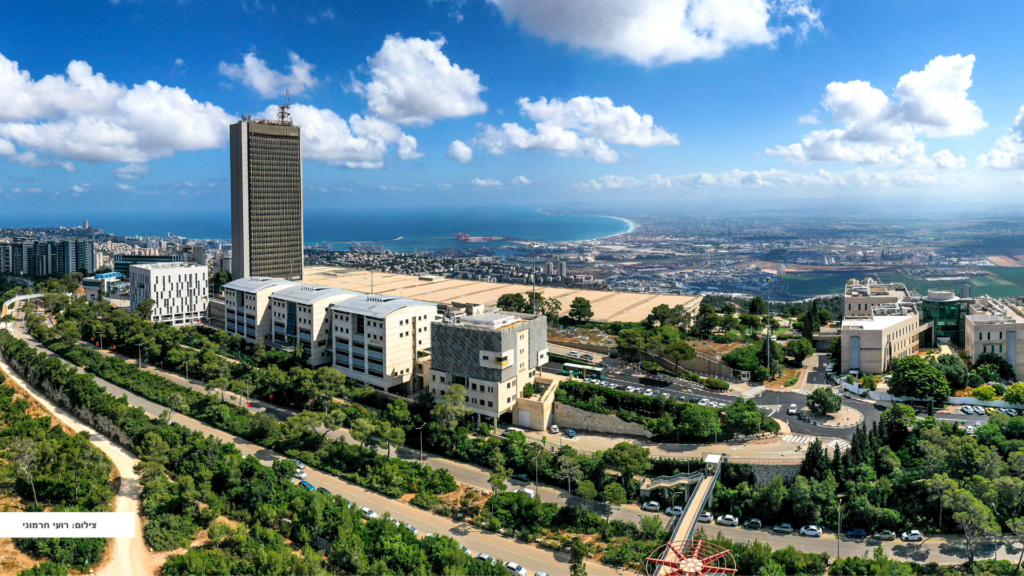
This research project, funded by the Division of Innovation & Sustainability at University of Haifa, was conducted in partnership with the Haifa Bay Cities Association for Environmental Protection and the Kiryat Yam Municipality.
Climate change has led to a significant rise in the frequency, intensity, and duration of extreme heat events over recent decades—a trend expected to intensify in the coming years. Urban residents are particularly vulnerable due to the urban heat island effect, dense construction, extensive concrete and asphalt surfaces, and high levels of human activity. Impacts are felt disproportionately in economically and socially marginalized communities.
As part of the Mediterranean basin—recognized as a climate change “hot spot”—Kiryat Yam faces growing exposure to extreme heat. The municipality therefore has a responsibility to address rising temperatures in public spaces through informed climate adaptation policies.
A survey of 343 residents revealed high awareness and concern regarding climate change impacts. However, vulnerability is not evenly distributed: differences were identified between newer and older neighborhoods, and the city’s relatively high proportion of elderly residents and lower socio-economic populations requires targeted attention. Some residents reported forgoing home cooling due to financial constraints, canceling daily activities, and even postponing medical treatments during extreme heat events. The survey also showed strong public support for shading solutions in public spaces, particularly at bus stops.
Combined with meteorological data and thermal mapping, the findings highlight an urgent need for comprehensive climate resilience action. The partnership between the municipality, regional environmental authorities, the University of Haifa, and the local community provides a strong foundation for coordinated and effective implementation.
A direct link to the full report is attached.
The report proposes a two-stage approach:
Short-term actions: installing shading infrastructure, developing public awareness systems, and training municipal teams.
Long-term strategy: creating a comprehensive climate adaptation plan including urban shade mapping, strategic tree planting, and integrating climate requirements into all urban planning processes.
This project serves as a model for other municipalities in Israel and globally. The methodology—combining scientific data, community surveys, technological mapping, and cross-sector collaboration—can support similar cities facing climate challenges and contribute to the UN Sustainable Development Goals, particularly in health, sustainable cities, and partnerships.