



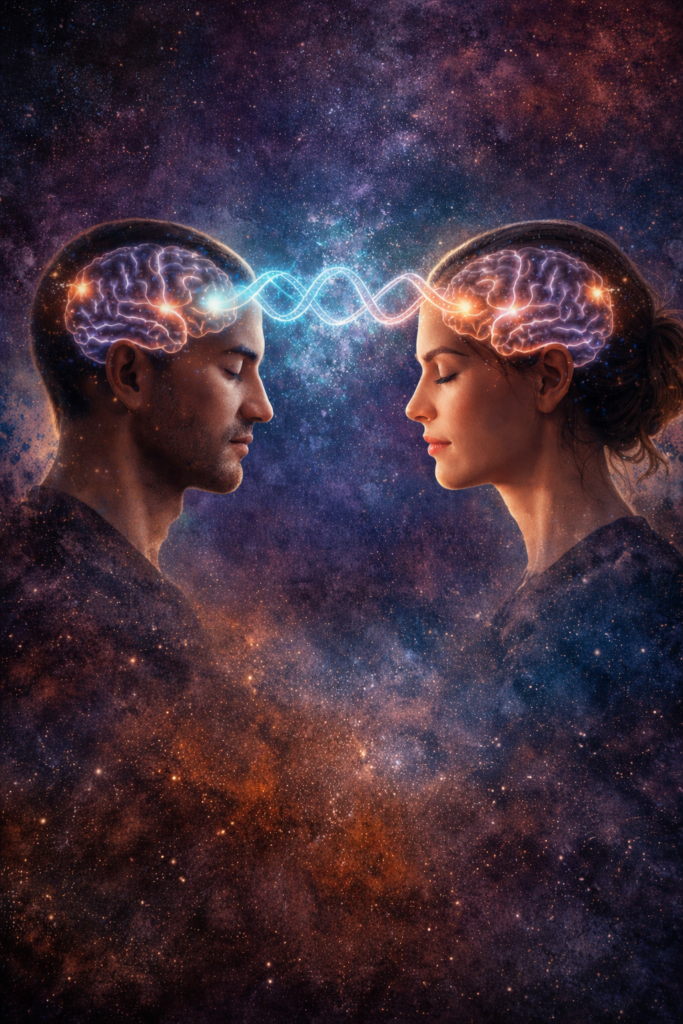
A new study from the University of Haifa reveals that the ability to mentally “sync” with a stranger during a first conversation may play a crucial role in psychological resilience during times of crisis.
Led by Dr. Oded Mayo from the lab of Prof. Simone Shamay-Tsoory, together with Prof. Shamay-Tsoory, Yael Molcho-Fisher, and Dr. Yarden Avnor from the School of Psychological Sciences, the research examined whether interpersonal brain synchrony in initial social encounters can predict mental coping following traumatic events.
Published in Translational Psychiatry, the study found that participants who exhibited higher levels of neural synchrony during an introductory conversation, measured before exposure to the events of October 7, demonstrated greater psychological resilience afterward. These individuals reported lower levels of post-traumatic stress symptoms, depression, and general distress relative to their degree of exposure.
The findings highlight the profound role of human connection at the neural level, suggesting that the brain’s capacity to align with others may serve as a protective factor in the face of collective trauma. This research positions the University of Haifa at the forefront of advancing knowledge on mental health, social neuroscience, and resilience in times of uncertainty.
The study’s impact reached the public through coverage in Globes and the TPSIL news platform, contributing to a broader conversation on mental resilience in Israeli society.