



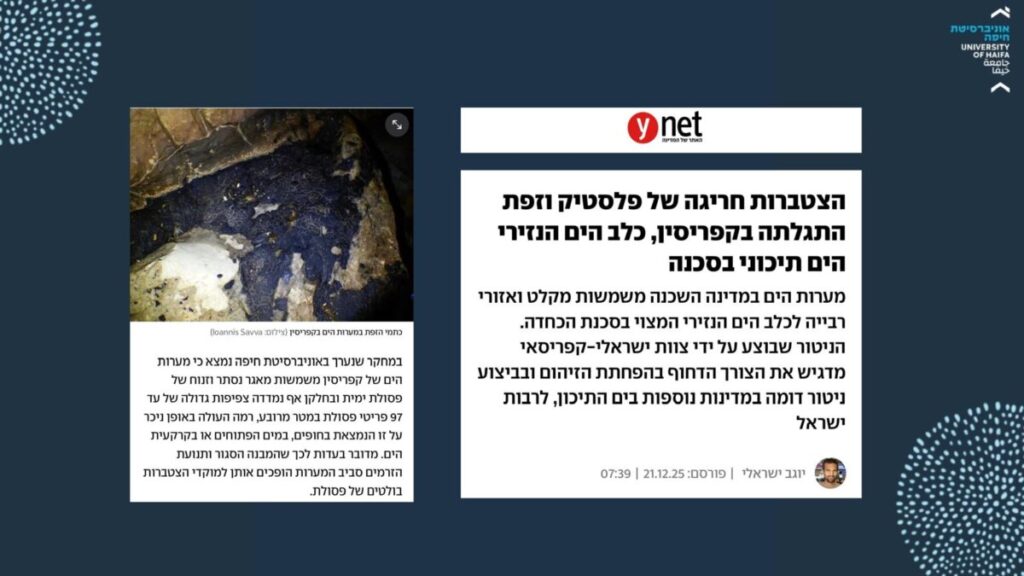
A new study led by researchers from the University of Haifa reveals that sea caves along the coast of Cyprus function as hidden accumulation hotspots for marine debris—harboring pollution levels far higher than those found on beaches, in open waters, or on the seafloor. In some caves, researchers recorded densities of up to 97 debris items per square meter, underscoring the scale of an overlooked environmental threat.
Published in Marine Pollution Bulletin, the study demonstrates that sea caves act as natural traps, collecting floating debris carried inward by wave action and currents. Most of the waste consisted of fragmented plastics, along with layers of tar mixed with plastic particles—an especially harmful combination due to its toxicity and long-term persistence in marine ecosystems. Until now, these enclosed and sensitive environments had received little scientific attention in the context of marine pollution.
Beyond pollution levels, the findings raise serious conservation concerns. Many of the surveyed caves serve as critical resting and breeding habitats for the Mediterranean monk seal, one of the world’s most endangered marine mammals. Alarmingly, the highest concentrations of debris were found deep inside narrow caves, precisely the sheltered areas essential for pup survival. This accumulation poses both physical risks and exposure to microplastics, which have already been detected in monk seal tissues.
Led by Prof. Dror Angel and doctoral researcher Younis Saba from the School of Marine Sciences at the University of Haifa, in collaboration with Cypriot researchers, the study introduces a systematic methodology for mapping and quantifying debris in confined marine spaces. The team emphasizes that this approach enables, for the first time, an accurate assessment of pollution in sea caves and calls for expanding monitoring efforts across the Mediterranean, including along Israel’s coastline.
This research highlights the University of Haifa’s commitment to advancing environmental sustainability through science that informs conservation, policy, and long-term ecosystem protection, transforming hidden environmental risks into actionable knowledge for a healthier Mediterranean Sea.