



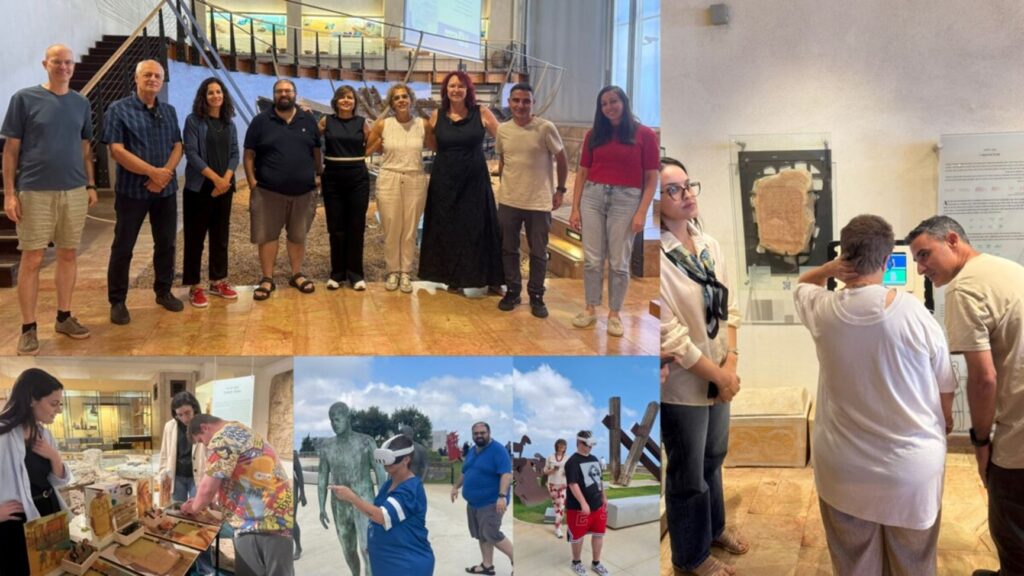
Description
The Hecht Museum at the University of Haifa hosted the concluding event of the course “Advanced Technologies in Development and Rehabilitation”, a collaborative initiative that exemplifies how academic innovation can generate meaningful social impact. The course was developed through a partnership between the Department of Occupational Therapy, the Department of Information Systems, the Hecht Museum, Shalem Foundation, the Dean of Students Office, and the University’s Sustainability and Innovation Unit.
Throughout the semester, students from distinct disciplinary backgrounds worked side by side to address a shared societal challenge: making the Hecht Museum accessible to individuals with intellectual and developmental disabilities. By combining human-centered design with technological expertise, the teams transformed an abstract commitment to inclusion into practical, implementable solutions.
Using advanced tools such as 3D printing, augmented reality, and artificial intelligence, students developed solutions designed not as conceptual prototypes, but as real-world applications intended for integration within the museum space. The final event showcased these innovations and demonstrated the power of interdisciplinary collaboration to bridge technology, culture, and community needs.
This initiative reflects the University of Haifa’s broader commitment to ensuring that technological progress serves social well-being, promoting accessibility, dignity and equal participation in cultural life. By embedding inclusion into innovation processes from the outset, the University reinforces a vision in which no community is left behind and where academic knowledge translates into tangible improvements in quality of life.
Through partnerships that unite education, culture, and social responsibility, the University of Haifa continues to cultivate scalable models of inclusive innovation with relevance far beyond the campus, models that invite philanthropic engagement and long-term investment in a more equitable and accessible future.